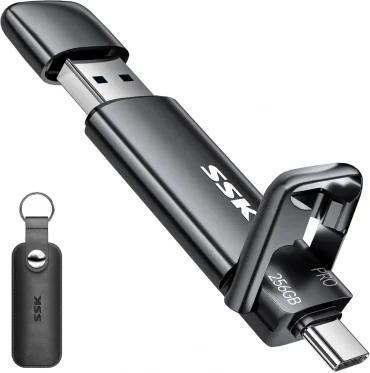
Looking for the fastest USB flash drives? Whether you're booting an operating system, editing 4K videos, running virtual machines, or transferring massive files, today's SSD based USB flash drives offer game changing performance. Unlike traditional, slow USB sticks, these miniature SSDs utilize advanced controllers to routinely deliver transfer speeds approaching or exceeding 1000MB/s. This makes them an excellent choice for booting from USB, power users who demand super fast file transfers, and anyone needing reliable, high performance portable storage.
Quick Summary of the Fastest USB Flash Drives
These high performance USB SSD flash drives combine blazing fast transfer speeds, excellent endurance, and broad compatibility across Windows, Linux, macOS, smartphones, tablets, and gaming consoles. Whether you're creating a bootable USB drive, transferring huge video projects, or carrying your operating system in your pocket, these are my current top recommendations.
-
- 🏆 SSK Dual USB-C/A SSD: Best overall combination of speed, value, portability, and compatibility with up to 1000MB/s transfers.
- 🎯 SanDisk Extreme PRO Dual Drive: Premium dual connector SSD flash drive featuring excellent reliability and optional password protection.
- 💰 Vansuny USB 3.2 SSD Flash Drive: Best value for speed, delivering up to 1000MB/s transfers at one of the lowest prices in its class.
- 🚀 AXE Speedy+ SSD: Fastest USB flash drive I've personally benchmarked, making it an excellent choice for portable operating systems and bootable USB drives.
My Background with USB Flash Drives
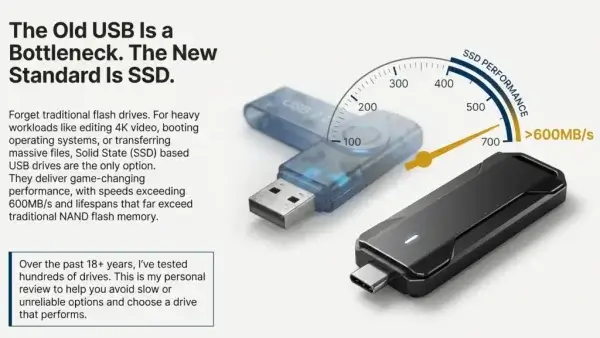
Over the past 19+ years, I've tested hundreds of USB flash drives, from inexpensive thumb drives and memory sticks to premium SSD based USB storage devices. Some have proven incredibly fast and dependable, while others failed after only moderate use, especially when repeatedly written to as bootable operating system drives.
Much of my testing revolves around creating multiboot USB drives using tools such as YUMI, installing portable Windows environments, running Linux Live distributions, cloning drives, and performing sustained file transfers. Those real world workloads quickly separate quality SSD flash drives from slower traditional USB sticks.
This guide combines my own hands-on experience with manufacturer specifications to help you choose a drive that's both fast and reliable.
Why USB Drive Speed Matters
A high speed USB SSD saves more than just time. Faster storage makes portable operating systems feel more responsive, reduces installation times, speeds backups, and improves productivity during demanding workloads.
Whether you're:
- Running Windows or Linux directly from USB
- Editing 4K or even 8K video files
- Transferring hundreds of gigabytes between systems
- Creating multiboot rescue or recovery drives
- Launching virtual machines from portable storage
An SSD based flash drive dramatically outperforms a traditional USB memory stick.
Benefits of SSD Based USB Flash Drives
- Much faster transfers: Copy huge files in seconds instead of minutes.
- Excellent boot performance: Faster random read speeds make portable operating systems feel far more responsive.
- Improved endurance: Better controllers, wear leveling, and higher quality NAND generally provide a much longer service life.
- Professional workflows: Edit photos and videos directly from the drive without constantly copying files to local storage.
- Broad compatibility: Modern dual USB-C/A designs work across desktops, laptops, tablets, smartphones, and many gaming consoles.
Top 4 Fastest USB Flash Drives in 2026
#1 SSK Dual USB-C/A SSD Flash Drive
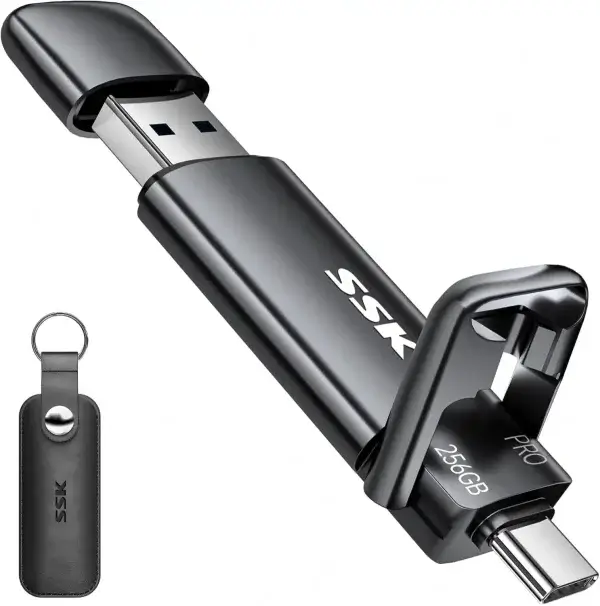
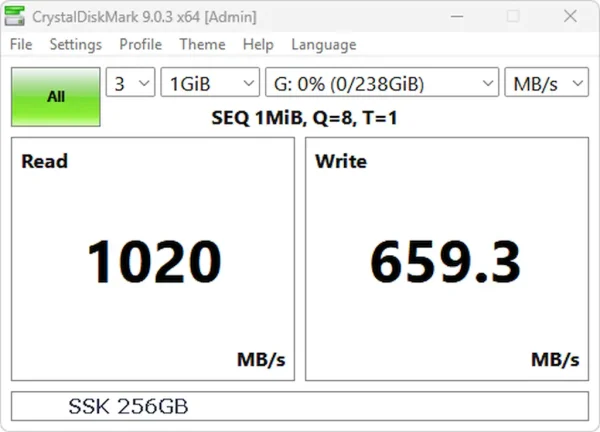
The SSK Dual USB-C/A SSD Flash Drive earns my top recommendation thanks to its outstanding combination of performance, build quality, versatility, and overall value. While it isn't the least expensive drive on this list, it consistently offers an excellent balance of speed, reliability, and compatibility across virtually every platform. Rated for up to 1000MB/s read and write, this miniature SSD uses both USB-A and USB-C connectors, making it equally at home on modern laptops, desktop PCs, tablets, smartphones, and even many gaming devices.
Unlike many inexpensive USB flash drives, the SSK is built around SSD technology rather than a simple flash controller, resulting in much better sustained performance during large file transfers. It's also an excellent choice for creating bootable operating systems, running Linux Live USB environments, carrying portable applications, or storing large video libraries.
Keep in mind that achieving the full advertised transfer rates requires a USB 3.2 Gen 2 port. When connected to older USB 3.0 or USB 3.1 Gen 1 ports, performance will be limited by the interface rather than the drive itself.
Highlights:
- Up to 1000MB/s manufacturer rated read/write performance
- USB-C and USB-A connectors built into one drive
- Solid zinc alloy enclosure
- Excellent value compared to competing SSD flash drives
- Ideal for portable operating systems and large file transfers
Best for: Overall performance, portable operating systems, multiboot USB drives, professional file transfers, and outstanding value.
SSK Dual USB-C/A SSD Benchmark Test
#2 SanDisk Extreme PRO Dual Drive
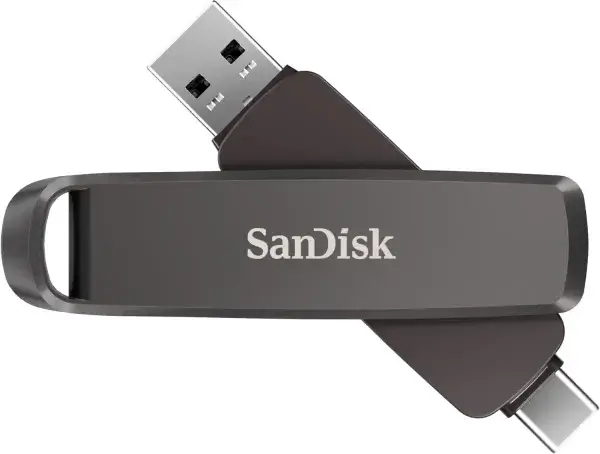
The SanDisk Extreme PRO Dual Drive remains one of the most refined SSD style USB flash drives available. With manufacturer rated speeds of up to 1000MB/s read and 900MB/s write, it combines exceptional performance with SanDisk's long standing reputation for quality and reliability.
Its integrated USB-C and USB-A connectors make transferring files between desktops, laptops, smartphones, and tablets effortless, eliminating the need for adapters. SanDisk also includes optional 128-bit AES password protection, making this an excellent option for users carrying sensitive personal or business data.
Although slightly more expensive than some competitors, its premium construction, dependable firmware, and broad compatibility make it one of the safest long term investments for anyone needing high speed portable storage.
Highlights:
- Up to 1000MB/s read and 900MB/s write speeds
- Premium SanDisk reliability
- Dual USB-C and USB-A connectors
- Optional password protection with 128-bit AES encryption
- Excellent compatibility across modern devices
Best for: Long term reliability.
#3 Vansuny USB 3.2 SSD Flash Drive
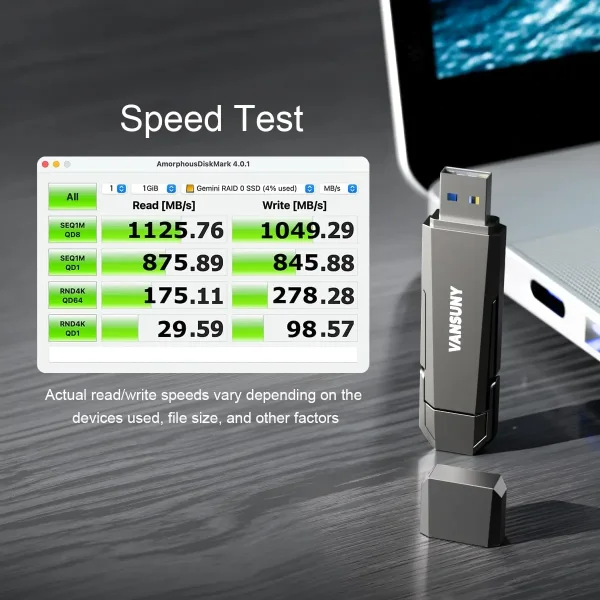
The Vansuny USB 3.2 SSD Flash Drive is one of the newest additions to the growing class of SSD based USB flash drives. Rated for up to 1000MB/s read and write, it combines impressive sequential performance with the convenience of both USB-C and USB-A connectors, making it easy to move files between modern laptops, desktop PCs, tablets, and smartphones without carrying adapters.
Unlike traditional USB memory sticks, the Vansuny is built around SSD technology and a USB 3.2 Gen 2 interface, allowing it to sustain much higher transfer rates during large backups and media transfers. Its aluminum alloy housing also helps dissipate heat during extended workloads while remaining compact enough to fit comfortably in a pocket or on a keychain.
Available in capacities up to 2TB, it's an excellent option for carrying virtual machines, bootable operating systems, photo libraries, large software collections, or editing video directly from the drive.
Highlights:
- Up to 1000MB/s manufacturer rated read/write speeds
- USB 3.2 Gen 2 interface
- Dual USB-C and USB-A connectors
- Durable aluminum alloy enclosure
- Available in capacities up to 2TB
- Excellent for large backups, media storage, and portable operating systems
Best for: Best value for speed, portable operating systems, large backups, media creation, and anyone wanting near flagship performance at a budget friendly price.
#4 AXE Speedy+ SSD Flash Drive
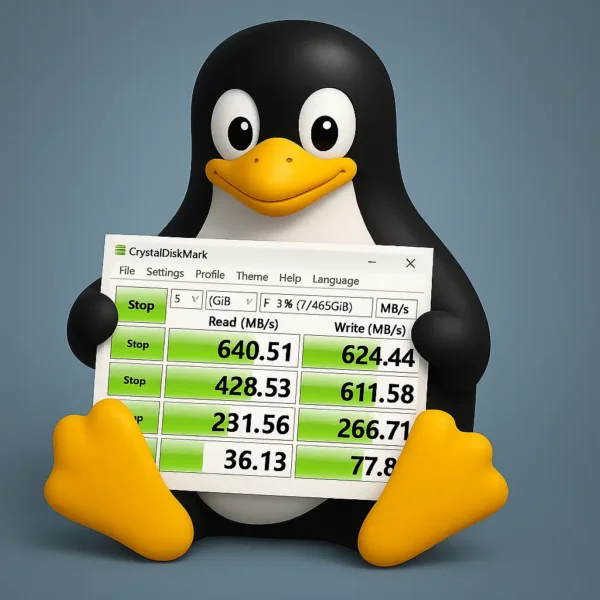
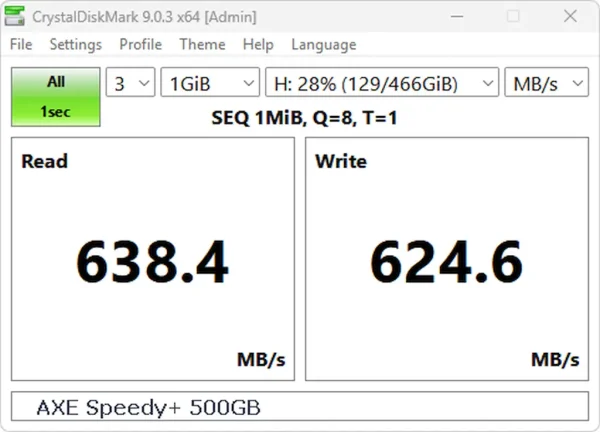
Although it now ranks fourth overall, the AXE Speedy+ remains the fastest USB flash drive I've personally benchmarked. While its published specifications list speeds of 600MB/s read and 500MB/s write, my own CrystalDiskMark testing actually exceeded those numbers, reaching over 638MB/s read and 624MB/s write.
One feature I especially appreciate is that Windows detects the AXE as a Local Disk instead of removable media. That small distinction makes it particularly useful for portable Windows installations, Linux Live environments, Windows To Go style workspaces, and multiboot USB drives created with YUMI.
Despite newer competitors advertising higher sequential speeds, the AXE continues to deliver excellent real world responsiveness, especially during operating system booting and workloads that depend heavily on random read performance rather than sequential transfers alone.
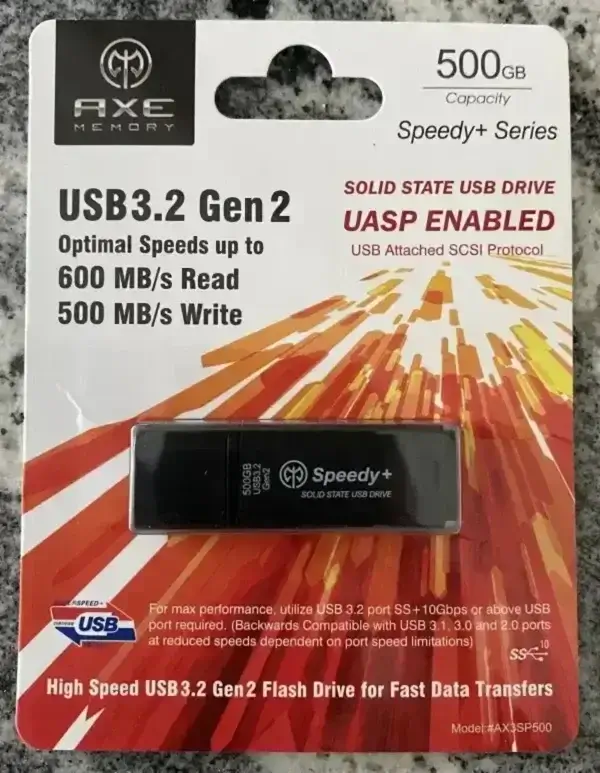
AXE Speedy+ 500GB Benchmark Test
A CrystalDiskMark benchmark confirms that the drive actually exceeds its advertised specifications under ideal conditions.
Compact Size
Highlights:
- Personally benchmarked at over 600MB/s read and write
- Detected as a Local Disk in Windows
- Excellent random read performance
- Ideal for bootable operating systems
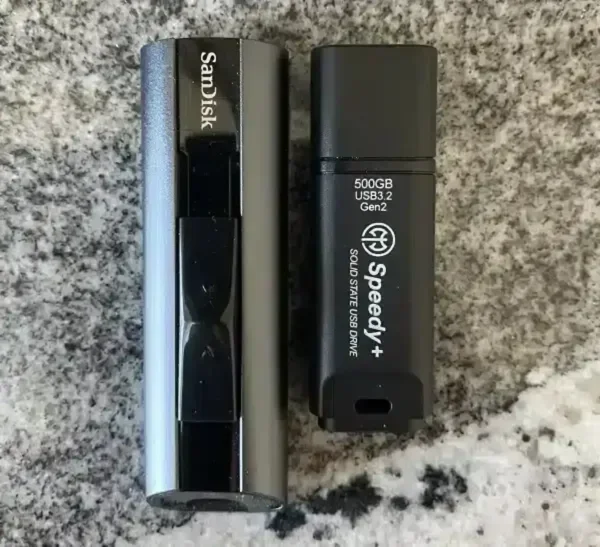
- Compact, lightweight design
Best for: Bootable USB drives, Windows To Go, Linux Live USBs, portable applications, and users wanting proven real world performance.
Choosing the Best USB Flash Drive
When selecting a high performance USB flash drive, don't focus exclusively on the advertised transfer speeds. Controller quality, thermal management, sustained write performance, connector options, and overall reliability can make an even bigger difference during everyday use.
Here are the factors I recommend considering before making your purchase:
- Speed: Drives capable of at least 500MB/s provide a dramatic improvement over traditional USB flash drives. USB 3.2 Gen 2 SSD models can often approach or exceed 1000MB/s.
- Durability: Metal housings and SSD based designs generally withstand heavy use much better than inexpensive plastic flash drives.
- Connector Type: Dual USB-C/A drives provide the greatest flexibility when moving between desktops, laptops, tablets, and smartphones.
- Capacity: Operating systems, virtual machines, and modern games consume storage quickly. Consider 512GB or larger if you routinely work with large files.
- Random Performance: If you plan to boot Windows or Linux directly from the drive, random read and write speeds are often more important than sequential benchmarks.
Compatibility Across Systems & Devices
Modern SSD flash drives are compatible with almost every operating system, although formatting may affect compatibility.
- Windows & Linux: Most drives work immediately when formatted as NTFS or exFAT.
- macOS: exFAT provides excellent cross platform compatibility, while APFS is recommended for Apple-only environments.
- Android Tablets & Phones: USB-C equipped devices can usually access dual connector SSD flash drives without adapters.
- Gaming Consoles: Many USB SSD flash drives work well with PlayStation and Xbox consoles for media storage and compatible game installations.
- Portable Applications: Fast SSD flash drives dramatically reduce launch times for portable software suites and development environments.
Pro Tip: If you regularly move data between Windows, macOS, and Linux, formatting the drive as exFAT provides the broadest compatibility.
Heat Management & Durability
Long sustained file transfers generate heat. Better SSD flash drives include metal enclosures that help dissipate that heat while minimizing performance throttling.
- SSK Dual USB-C/A SSD: Zinc alloy enclosure provides effective cooling during sustained workloads.
- SanDisk Extreme PRO Dual Drive: Premium construction designed for dependable long term performance with optional password protection.
- Vansuny USB 3.2 SSD: Aluminum alloy housing improves heat dissipation while remaining compact and lightweight.
- AXE Speedy+ SSD: Proven thermal stability during extended benchmark testing and operating system workloads.
Pro Tip: If you routinely copy hundreds of gigabytes at a time, choose a drive with a metal enclosure and USB 3.2 Gen 2 support for the best sustained performance.
Real World Performance: Speed in Action
While manufacturers publish impressive sequential read and write speeds, real world performance depends on your computer, USB controller, file sizes, operating system, and workload. Booting an operating system, launching applications, and copying thousands of smaller files rely heavily on random read and write performance rather than peak sequential throughput alone.
Of the drives I've personally benchmarked, the SSK Dual USB-C/A SSD delivers the fastest overall sequential performance, while the AXE Speedy+ continues to impress with excellent consistency and responsive boot performance when running Windows or Linux directly from USB. The SanDisk Extreme PRO Dual Drive and Vansuny USB 3.2 SSD both advertise transfer speeds approaching 1000MB/s on USB 3.2 Gen 2 systems, and I'll update this comparison with my own benchmark results as I complete hands-on testing.
Longevity & Reliability Over Time
One of the biggest advantages SSD based USB flash drives have over traditional USB sticks is long term reliability. While both use flash memory, SSD drives typically incorporate more advanced controllers, better wear leveling, stronger error correction (ECC), bad block management, and higher quality NAND flash.
These technologies distribute writes more evenly across the memory, reducing wear and extending the overall lifespan of the drive. Endurance is often measured in terms of TBW (Terabytes Written) and P/E (Program/Erase) cycles, both of which are substantially higher on quality SSD storage than on inexpensive USB thumb drives.
After nearly two decades of working with bootable USB media, I've found that SSD flash drives hold up far better under demanding workloads such as:
- Running Linux Live operating systems
- Portable Windows installations
- Virtual machines
- Daily software development
- Frequent backup and restore operations
- Large media transfers
I still own several SSD flash drives purchased over five years ago that continue to perform flawlessly despite thousands of gigabytes written. By comparison, many inexpensive flash drives begin showing performance degradation or outright failure after prolonged heavy write activity.
Pro Tip: Regardless of the drive you choose, maintaining regular backups remains the best protection against unexpected hardware failure.
Best USB Flash Drive for Every Use Case
Rather than choosing solely by advertised transfer speeds, here's which drive I recommend depending on how you intend to use it.
| Use Case | Best Pick | Why? |
|---|---|---|
| Best Overall | 🏆 SSK Dual USB-C/A SSD | Outstanding combination of speed, affordability, portability, and compatibility. |
| Best for Reliability | 🛡 SanDisk Extreme PRO Dual Drive | Premium build quality, optional AES encryption, and SanDisk's proven reputation. |
| Best Value for Speed | 💰 Vansuny USB 3.2 SSD | Delivers 1000MB/s-class performance at one of the lowest prices in this category. |
| Best for Bootable Operating Systems | 🚀 AXE Speedy+ | Most consistent real world benchmark results I've personally recorded with excellent random performance. |
Pro Tip: Choose the drive that best matches your workload rather than focusing exclusively on the highest advertised sequential speed.
Read & Write Speed Comparison
| Feature | SSK Dual USB-C/A | SanDisk Extreme PRO | Vansuny USB 3.2 | AXE Speedy+ |
|---|---|---|---|---|
| Read Speed | Up to 1000 MB/s* | Up to 1000 MB/s* | Up to 1000 MB/s* | 600 MB/s |
| Write Speed | Up to 1000 MB/s* | Up to 900 MB/s* | Up to 1000 MB/s* | 500 MB/s |
| Interface | USB 3.2 Gen 2 | USB 3.2 Gen 2 | USB 3.2 Gen 2 | USB 3.2 |
| Connector | USB-C / USB-A | USB-C / USB-A | USB-C / USB-A | USB-A |
| Construction | Zinc Alloy | Premium Metal | Aluminum Alloy | Metal Housing |
| Best For | Overall Value | Reliability | Value for Speed | Bootable Operating Systems |
*Manufacturer rated speeds. Actual transfer rates vary depending on USB controller, host hardware, file sizes, operating system, and workload.
Pendrive Buying Tips
- Use a USB 3.2 Gen 2 port whenever possible to unlock the full performance potential of these SSD flash drives.
- Format as exFAT if you regularly move files between Windows, Linux, and macOS.
- Choose a metal enclosure if you frequently transfer hundreds of gigabytes at a time, as it helps dissipate heat.
- For portable operating systems, random read and write performance is often more important than sequential benchmark numbers.
- Don't buy solely by advertised speeds. Controller quality, firmware, sustained performance, and long term reliability matter just as much.
SSD Flash Drive FAQs
What makes SSD flash drives faster than traditional USB drives?
SSD flash drives use more advanced controllers, higher quality NAND flash memory, larger cache buffers, and faster interfaces such as USB 3.2 Gen 2. Together these improvements allow transfer speeds approaching or exceeding 1000MB/s, dramatically outperforming conventional USB memory sticks.
Are SSD flash drives more reliable than regular USB sticks?
Yes. Most SSD flash drives include wear leveling, bad block management, and advanced error correction that significantly improves long term durability compared to inexpensive USB flash drives.
Can I boot Windows or Linux from an SSD flash drive?
Absolutely. SSD flash drives are ideal for portable Windows installations, Linux Live systems, recovery environments, and multiboot USB drives because of their superior random read performance and faster boot times.
Do I need USB 3.2 Gen 2 to achieve full speed?
Yes. To reach transfer rates approaching 1000MB/s, both the drive and your computer must support USB 3.2 Gen 2. Older USB ports remain compatible but will reduce maximum performance.
Is USB-C faster than USB-A?
Not necessarily. The connector itself doesn't determine speed. Performance depends on the USB specification supported by both the drive and the host device. USB-C simply offers greater convenience and compatibility with newer hardware.
Which USB flash drive is best for creating bootable USB drives?
For my own bootable USB projects using YUMI and Linux Live distributions, I've consistently had excellent results with the AXE Speedy+, while the SSK, SanDisk Extreme PRO, and Vansuny all offer excellent alternatives with faster advertised sequential transfer rates.

Final Verdict: Fastest Thumb Drives for 2026
The days when every USB flash drive delivered roughly the same level of performance are long gone. Modern SSD based USB drives now rival many external SSDs, making them excellent choices for everything from portable operating systems to professional content creation.
If you're looking for the best all around performer, the SSK Dual USB-C/A SSD earns my top recommendation thanks to its combination of speed, affordability, and excellent cross platform compatibility.
If long term dependability is your priority, the SanDisk Extreme PRO Dual Drive continues to justify its premium reputation with quality construction, optional hardware encryption, and consistently excellent performance.
The Vansuny USB 3.2 SSD Flash Drive stands out as my favorite value pick. It delivers the same 1000MB/s-class performance advertised by several higher priced competitors while costing considerably less, making it an easy recommendation for buyers who want the best performance per dollar.
Finally, while it now occupies the fourth position overall, the AXE Speedy+ remains the most consistent USB flash drive I've personally benchmarked and continues to be one of my favorite choice for creating bootable Windows and Linux USB drives thanks to its excellent real world responsiveness.
-
- 🏆 Best Overall: SSK Dual USB-C/A SSD
- 🛡 Best Reliability: SanDisk Extreme PRO Dual Drive
- 💰 Best Value for Speed: Vansuny USB 3.2 SSD Flash Drive
- 🚀 Best for Bootable Operating Systems: AXE Speedy+ SSD
Whether you're creating multiboot USB drives with YUMI, carrying a portable operating system, editing 4K video directly from removable storage, or simply looking for the fastest USB flash drive available, any of these SSD based drives will deliver a substantial improvement over a traditional USB memory stick.