Updating Linux keeps your system secure, stable, and running smoothly. Whether you're using Ubuntu, Debian, Fedora, CentOS, or Arch Linux, this guide explains how to update installed packages, upgrade your system, and move to newer distribution releases using the appropriate package management tools.
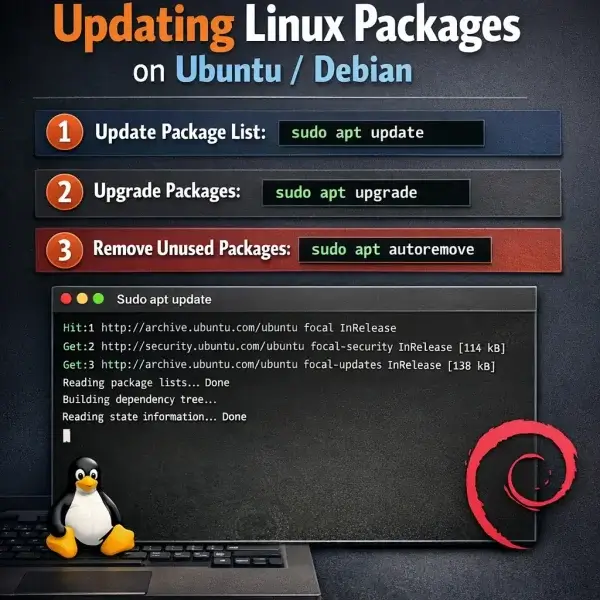
Linux Update Commands Quick Reference
- Ubuntu / Debian:
sudo apt update && sudo apt upgrade - Fedora:
sudo dnf upgrade --refresh - Rocky Linux / AlmaLinux / CentOS Stream:
sudo dnf upgrade --refresh - Arch Linux:
sudo pacman -Syu
Why Updating Linux Is Important
Regular Linux updates help protect your system from security vulnerabilities, fix software bugs, improve hardware compatibility, and provide access to the latest features. Unlike many operating systems, Linux updates are typically transparent and user-controlled, making it easy to keep your system current.
Keeping your Linux installation updated can also improve system performance and reduce the likelihood of encountering known issues that have already been resolved upstream.
How to Update Ubuntu or Debian
Ubuntu, Debian, Linux Mint, and other Debian-based distributions use the APT package manager.
- Open a Terminal: Press Ctrl + Alt + T.
- Refresh Package Lists:
sudo apt update
This checks configured repositories for newer package versions.
- Install Available Updates:
sudo apt upgrade
Type Y when prompted to continue.
- Remove Unused Packages:
sudo apt autoremove && sudo apt clean
This removes unnecessary dependencies and clears cached package files.
Optional: Full System Upgrade
For upgrades that require package additions or removals, run:
sudo apt full-upgrade
This command handles dependency changes that may occur during larger system updates.
How to Upgrade Ubuntu to a New Release
To move from one Ubuntu release to another (for example, from one LTS release to the next), first ensure your system is fully updated, then run:
sudo do-release-upgrade
Follow the prompts to complete the upgrade process.
How to Update Fedora Linux
Fedora uses the DNF package manager.
- Open a Terminal.
- Refresh Metadata and Install Updates:
sudo dnf upgrade --refresh
This downloads the latest repository information and installs available updates.
- Remove Unneeded Packages:
sudo dnf autoremove
This removes dependencies that are no longer required.
How to Upgrade Fedora to a New Version
Fedora provides a built-in upgrade utility for moving between major releases.
Install the upgrade plugin:
sudo dnf install dnf-plugin-system-upgrade
Download packages for the target release:
sudo dnf system-upgrade download --releasever=version_number
Start the upgrade:
sudo dnf system-upgrade reboot
Replace version_number with the Fedora release you want to install.
How to Update Rocky Linux, AlmaLinux, CentOS Stream, and Other RHEL-Based Systems
Rocky Linux, AlmaLinux, CentOS Stream, and many Red Hat Enterprise Linux (RHEL) based distributions use the DNF package manager.
- Open a Terminal.
- Refresh Repository Metadata and Install Updates:
sudo dnf upgrade --refresh
This downloads the latest repository information and installs available package updates.
- Remove Unused Dependencies:
sudo dnf autoremove
This removes packages that are no longer required.
Older CentOS Systems
Older CentOS releases may still use the YUM package manager:
sudo yum update
YUM and DNF perform similar functions, but DNF is the modern package manager used by current RHEL-based distributions.
How to Update Arch Linux
Arch Linux follows a rolling-release model and uses the Pacman package manager.
- Open a Terminal.
- Synchronize Repositories and Upgrade Packages:
sudo pacman -Syu
This updates the entire system in a single command.
- Remove Orphaned Packages:
sudo pacman -Rns $(pacman -Qdtq)
This removes unused dependencies no longer required by installed software.
Upgrading Arch Linux
Arch Linux does not have versioned releases. Running:
sudo pacman -Syu
regularly keeps the system updated with the latest software and security fixes.
How to Check Your Linux Distribution Version
If you're unsure which Linux distribution or version you're running, use one of the following commands:
lsb_release -a
or:
cat /etc/os-release
These commands display distribution information including release version and codename.
Best Practices for Updating Linux
- Update your system regularly
- Review upgrade prompts carefully
- Back up important files before major upgrades
- Remove unused packages periodically
- Reboot after kernel updates when recommended
- Follow official distribution documentation for major release upgrades
Frequently Asked Questions
How often should I update Linux?
Most desktop users should update at least once per week. Systems exposed to the internet or used in production environments may require more frequent updates.
What is the difference between apt update and apt upgrade?
apt update refreshes package information from repositories. apt upgrade installs newer versions of packages already installed on your system.
Is sudo apt autoremove safe?
Yes. It removes packages that were installed as dependencies but are no longer required. Always review the package list before confirming removal.
Do I need to reboot after updating Linux?
A reboot is generally only required after kernel updates or major system library updates. Many distributions will notify you when a reboot is recommended.
Can I update Linux from the command line?
Yes. Most Linux distributions provide command-line package management tools such as APT, DNF, YUM, and Pacman that allow you to update the entire system from a terminal.
Final Thoughts on Updating Linux
Keeping Linux up to date is one of the simplest ways to maintain a secure, reliable, and high-performing system. Whether you use Ubuntu, Debian, Fedora, Rocky Linux, AlmaLinux, CentOS Stream, or Arch Linux, regularly installing updates helps protect against vulnerabilities while ensuring access to the latest software improvements.
By understanding the package management tools used by your distribution, you can confidently manage updates, perform upgrades, and keep your Linux system running at its best.
If you found this guide helpful, you may also want to read How to Install Chrome on Linux.