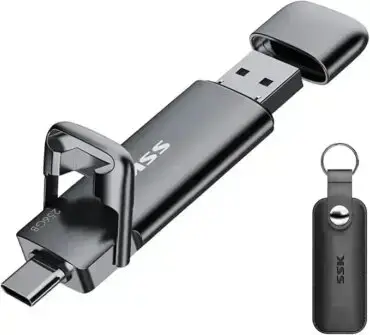
For over two decades, Pendrive Linux has helped countless people boot from USB, pioneering easy methods for anyone looking to create bootable USB drives and multiboot USB drives. Since 2006, Pendrive Linux has provided free software and simplified tutorials to make USB booting effortless. Whether you want to test drive Linux Live, install an OS, or repair a broken PC, we help you build a portable digital workspace containing all your OS and tools on one USB drive you can carry in your pocket and run wherever you go.

We currently develop and maintain the popular YUMI multiboot USB creator and the Universal USB Installer (UUI), our original bootable USB creation utility. On this site, you'll also find topics covering Bash/shell Linux commands, persistence (for saving and restoring OS changes on subsequent reboots), VM virtualization (QEMU, VirtualBox, Proxmox, etc), and easy BIOS/UEFI configuration for booting from USB flash drives.

What Is a Bootable USB Drive?
A bootable USB drive is a standard USB flash drive configured to start a computer and load software directly from the device instead of the internal hard drive. It contains the boot files required to bypass the existing operating system upon startup.
Key Use Cases
- Install operating systems: Deploy clean installations of Windows, macOS, or Linux.
- Run live environments: Experience Linux distributions directly from the USB without modifying the host computer.
- Troubleshoot and repair: Fix corrupted operating systems and repair startup errors.
- Recover critical data: Access internal storage to rescue files from a crashing or unbootable system.
- Perform system maintenance: Execute hardware diagnostics, scan for malware outside the main operating system, and clone or back up entire drives.
- Conduct security audits: Run portable forensics and cybersecurity tools in an isolated environment.
What Is a Multiboot USB?
While a standard bootable USB typically holds just one operating system or installer, a multiboot USB is configured to host multiple operating systems, antivirus rescue disks, and diagnostic utilities on a single drive. When the computer boots, it displays a startup menu allowing you to choose which tool or operating system to launch. YUMI and UUI are both applications designed specifically to create and manage this type of multi utility setup.
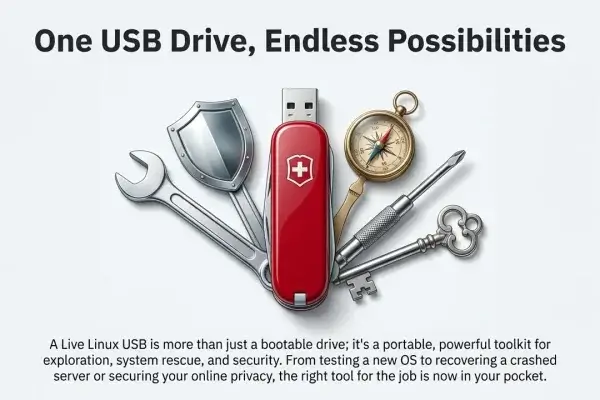
What Can You Do With a Bootable USB?
USB flash drives are inexpensive, reusable, and convenient for installing operating systems, running Live environments, and maintaining computers. A bootable USB can be used to:
- Install or upgrade an operating system - Create Windows or Linux installation media for a new PC, a clean installation, or an upgrade.
- Repair or recover a computer - Boot into recovery tools to fix startup problems, recover files, restore backups, or troubleshoot a damaged operating system.
- Run Linux without installing it - Start a Linux Live environment directly from USB and use it without changing the computer's internal storage.
- Build a portable computer toolkit - Carry installers, antivirus utilities, cloning software, diagnostics, and recovery environments on one drive.
- Use persistent storage - On supported Linux distributions, save files, applications, and settings to the USB drive so they remain available after rebooting.
A high-performance USB flash drive or portable SSD can make a noticeable difference when running an operating system directly from USB.
When you're finished with a bootable drive, you can permanently erase it before reusing, selling, or disposing of it.
How to Create a Bootable USB Drive
Creating bootable USB media is straightforward with software that handles the formatting, file preparation, and boot configuration for you. Pendrive Linux develops two primary tools:
- YUMI PY - the current cross platform version of YUMI for Windows and Linux. It is designed for multiboot USB drives containing multiple ISO images, persistence, and additional tools.
- Universal USB Installer (UUI) - Pendrive Linux's original Windows native USB creation utility for creating bootable USB drives and multiboot toolkits.
What You'll Need
- A USB flash drive. 16 GB or larger is recommended for multiboot use.
- A Windows or Linux ISO image, or another supported bootable image.
- YUMI PY or Universal USB Installer.
- A computer capable of booting from USB.
The Basic Process
- Choose your USB creation tool. Download YUMI PY or Universal USB Installer.
- Select your ISO image. Choose the operating system or utility you want to use, or download a supported distribution through the software where available.
- Select your USB drive. Insert the USB flash drive and make sure the correct removable device is selected.
- Configure optional features. Enable persistence or other available options if needed.
- Create the bootable USB. Let the software prepare the drive and configure the necessary boot files.
- Boot from USB. Restart the computer and select the USB device from the BIOS, UEFI, or one-time boot menu.
Always back up important files before modifying a USB drive, as creating bootable media may erase existing data.
For detailed instructions, see the full YUMI or the Universal USB Installer posts.
YUMI & Universal USB Installer
Pendrive Linux develops and maintains two long-running USB creation utilities. Both can create multiboot USB drives, but they are aimed at somewhat different setups.
YUMI: Multiboot USB Creator
Updated: 24 Oct, 2026 - yumi_py-1.1.10.exe
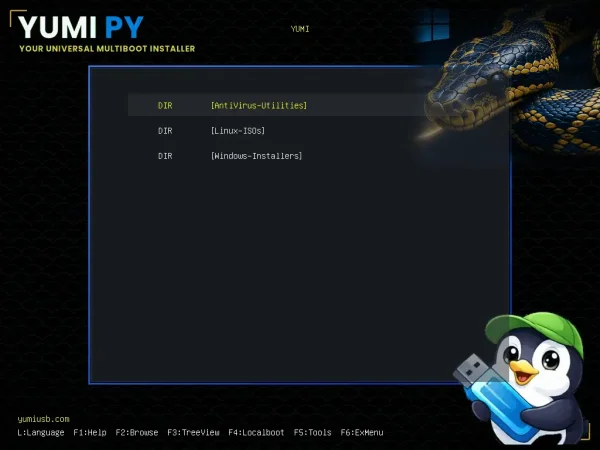
YUMI (Your Universal Multiboot Installer) is Pendrive Linux's flagship multiboot USB creator. It lets you place multiple operating systems, installers, recovery environments, antivirus utilities, and diagnostic tools on a single USB flash drive and manage them from a boot menu.
YUMI PY is the current cross platform version of YUMI and runs natively on Windows and Linux. It receives the most frequent updates and includes features such as automatic ISO downloads, per distro persistence file creation, integrated QEMU/VirtualBox test booting, and LAN Share for booting ISOs from a browser over a local network.
YUMI is particularly useful for building a reusable USB toolkit containing:
- Windows 10 and Windows 11 installation media
- Windows to go style Windows 11 VHDx builds
- Multiple Live Linux distributions
- Windows PE recovery environments
- Antivirus rescue disks
- Backup and cloning software
- System hardware diagnostics tools
- Portable operating systems and USB bootable virtual machines
See the full post for setup instructions, features, supported systems, and recent changelog.
Universal USB Installer (UUI)
Updated: 24 Oct, 2026 - uui_py-1.0.0.2.exe
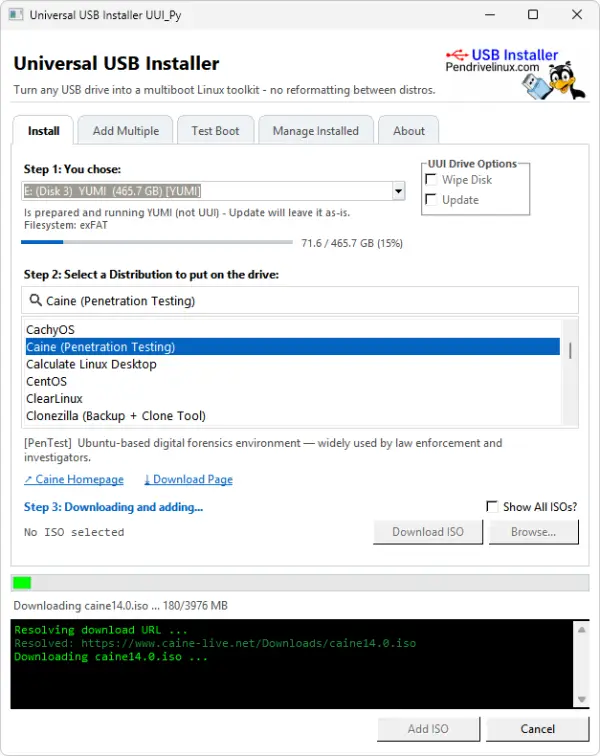
Universal USB Installer (UUI) is Pendrive Linux's original bootable USB creation utility. It was first introduced nearly two decades ago and remains a Windows native option for creating bootable USB drives and multiboot toolkits. The newest Python based build UUI PY is also cross platform Windows and Linux compatible.
UUI PY is a good fit if you:
- Want a straightforward bootable USB creation utility.
- Need a multiboot USB containing Windows installers, Linux distributions, and recovery tools.
- Already know Universal USB Installer by name and prefer to continue using it.
- Don't need the LAN booting from a browser or backup/restore/clone USB features.
See the UUI page for additional setup instructions, other available options, and the changelog.
Boot from USB on BIOS and UEFI Systems
Once your bootable USB has been created, you need to tell your computer to start from it instead of the internal drive. The exact procedure varies by manufacturer, but the basic process is similar across desktop and laptop computers.
Modern computers generally use UEFI firmware, while older systems may use traditional BIOS. Current bootable USB tools can support both when the selected operating system or utility supports the corresponding firmware mode.
How to Boot from USB Using BIOS
- Insert the bootable USB flash drive.
- Restart or power on the computer.
- Immediately press the BIOS Setup key. Common keys include Delete, F2, or Esc.
- Open the Boot or Boot Order menu.
- Move the USB drive to the appropriate boot position.
- Save your changes and exit. F10 is common on many systems.
- The computer should restart and boot from the USB device.
How to Boot from USB Using UEFI
- Insert the USB flash drive.
- Restart the computer.
- Press the manufacturer's Boot Menu key. Common keys include F12, F10, Esc, or F11.
- Select the USB device from the boot menu.
- If the system does not boot, check the UEFI and Secure Boot settings. Some operating systems and specialized utilities may require different firmware settings.
If you're unsure which key your computer uses, see our guide to accessing BIOS and UEFI settings on popular computer manufacturers.
BIOS vs. UEFI: What's the Difference?
BIOS and UEFI are firmware interfaces that initialize hardware and start the operating system. UEFI is the modern replacement for traditional BIOS and includes additional features such as support for larger storage devices, Secure Boot, and faster startup.
Compare USB Boot Tools
The best tool depends on what you're trying to accomplish.
Choose YUMI PY if you want a cross platform multiboot USB containing multiple operating systems, installers, recovery environments, or utilities.
Choose Universal USB Installer if you want simpler bootable USB creation without the extras.
Choose Rufus if you primarily need to write a single ISO image to a USB drive.
Choose Balena Etcher if you want a simple graphical tool for DD style writing of disk images to removable media.
| Feature | YUMI PY | UUI PY | Rufus | Balena Etcher |
|---|---|---|---|---|
| Multiboot USB Support | Yes | Yes | No | No |
| Windows Installation Media | Yes | Yes | Yes | Yes |
| Linux Live USB Support | Yes | Yes | Yes | Yes |
| Persistent Linux Storage | Yes | Yes | Limited | No |
| Cross Platform | Windows & Linux | Windows & Linux | Windows | Windows, Linux & macOS |
| Auto ISO Downloads | Yes | Yes | Limited | No |
| Integrated VM Boot Testing | Yes | No | No | No |
| LAN Share / Browser Booting ISO | Yes | No | No | No |
| BIOS & UEFI Support | Yes | Yes | Yes | Yes |
| Best USB boot creator For | Cross platform multibooting toolkits w/advanced features | Cross platform multiboot toolkits | Single image USB creation | Simple DD style image writing |
| Learn More | YUMI PY guide | UUI guide | Rufus | Balena Etcher |
For a reusable multiboot USB containing Windows installers, Linux distributions, recovery environments, and diagnostic utilities, YUMI PY or UUI PY are the Pendrive Linux options to consider. If you only need to write a single ISO image to a flash drive, Rufus or Balena Etcher are simpler alternatives.
For additional USB creation tools and legacy utilities, browse our directory of bootable USB creator software.
About Pendrive Linux
The Original Pioneer in Bootable & Multiboot USB Technology
| 2006 Project Born |
➡️ | Millions Users Helped |
➡️ | Popular Tools UUI & YUMI |
Pendrive Linux began in 2006 as a personal project focused on finding ways to make it easier to boot Linux from USB removable media (testing Linux distros). Since then, the site has evolved into a well known premier resource for learning more about USB booting and portable operating systems.
The site actively maintains core tools for digital workspaces: YUMI (multiboot installer) and Universal USB Installer (UUI). Additionally, the site offers comprehensive tutorials on Linux commands, persistent storage configuration, virtualization, and BIOS/UEFI troubleshooting.
Our software and tutorials serve home users, students and educators, computer repair technicians, system administrators, IT professionals, Linux enthusiasts, developers, and businesses.
"This site began as a way to share what I learned while experimenting with booting Linux from USB flash drives. Over the years, it has grown into a collection of tutorials and software that has helped countless people install operating systems, recover broken computers, and discover Linux... Thank you to everyone who has supported this site's mission throughout the years."
~ Lance, Founder of Pendrive Linux
Frequently Asked Questions
What is a bootable USB drive?
A bootable USB drive is a USB flash drive configured to start a computer and load an operating system, installer, or recovery environment directly from the USB device instead of the computer's internal storage.
Can I install Windows from a USB flash drive?
Yes. Windows can be installed using USB installation media. Tools such as YUMI and Universal USB Installer can prepare supported Windows installation media for booting on a compatible computer.
Can one USB drive contain multiple operating systems?
Yes. Multiboot USB software such as YUMI and UUI can place multiple Windows installers, Linux distributions, recovery environments, and diagnostic utilities on the same USB drive.
What is persistence?
Persistence allows supported Live Linux distributions to save files, installed applications, and personal settings to the USB drive so they remain available after rebooting.
Do I need to format my USB drive?
Most bootable USB creation software can prepare the USB drive as part of the creation process. Always back up important files before modifying any USB device.
How do I turn my bootable USB back into a normal storage drive?
Once you no longer need the bootable content, you can reformat the drive for normal storage. See our guide on restoring your USB drive's partition.
Is Pendrive Linux's software safe to download?
YUMI and Universal USB Installer are developed by Pendrive Linux and are distributed from pendrivelinux.com. As with any software that writes to a drive, download from the official Pendrive Linux site and back up important data before creating bootable media.
Which bootable USB creator should I use, YUMI or UUI?
Both support multiboot USB creation. YUMI PY is the better choice if you need Linux support or want the current cross platform YUMI build and its newer features. UUI PY is a good choice if you prefer a simpler tool. See the YUMI multiboot USB creator page and Universal USB Installer page for more information.
Is YUMI a good alternative to Rufus?
Yes, when you need a multiboot USB. Rufus is primarily designed for writing individual ISO images, while YUMI is designed to keep multiple operating systems, installers, recovery tools, and utilities on one USB drive.
How large should my USB drive be?
Many individual operating systems can fit on an 8 GB flash drive, but 16 GB or larger is recommended if you plan to store multiple ISO images or use persistent storage.
Is Pendrive Linux free?
Yes. Pendrive Linux provides free software, tutorials, and educational resources covering bootable USB creation, USB booting, Linux, Windows installation media, recovery tools, and related topics.
Choose Your USB Boot Tool
Ready to get started? Choose YUMI PY if you want a cross-platform multiboot creator for Windows and Linux, or Universal USB Installer (UUI) if you're using Windows and prefer Pendrive Linux's original USB creation utility. Both are free.
Not sure which fits your setup? Use the USB boot tool comparisons above, or browse our best bootable USB creator software category.
Browse PendriveLinux.com for practical tutorials covering Linux distributions, Windows installation media, persistence, virtualization, BIOS/UEFI configuration, USB performance, recovery tools, and other aspects of portable computing.