Virtual Machine Emulation Category

Easily Run gOS from Windows

Thursday, April 17th, 2008

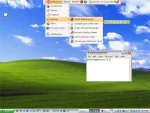
The following tutorial enables the average computer user to run gOS Linux from within Windows without rebooting. gOS can be run from a folder on your Windows PC or from a folder on your USB flash drive or other portable device. Keep in mind that there is currently no persistence feature being utilized in this tutorial. The installation acts just like the Live CD and the gOS operating system is being emulated using Qemu, a virtual machine emulation software. Qemu emulation makes for a great and easy way to test out a Linux distro without modifying the host computers hardware.

Read the rest of this entry

Run Ubuntu 7.10 from Windows

Friday, January 11th, 2008

This tutorial explains How To Run Ubuntu 7.10 from a portable USB device or from a folder within Windows. As noted before, the advantage to using Qemu hardware emulation as opposed to a native USB boot is that you can to plug your USB stick or portable hard drive into any available Windows PC and run a completely separate Linux operating system without rebooting the Windows Host PC. In addition, by utilizing the casper persistent feature, you can save your personal settings and changes back to the img located in the installation directory and then restore those saved settings on each boot.

Read the rest of this entry

Qemu Persistent Knoppix

Friday, November 30th, 2007

The following tutorial covers the process of running Knoppix persistently from a portable USB flash drive using Qemu from a Windows 98, XP or Vista host PC without ever rebooting. Most of your personal settings and changes are automatically saved back to the stick and restored at boot via the Persistence image. This is accomplished using Qemu emulation software in conjunction with a persistent virtual hard disk image file for saving and restoring changes.

Read the rest of this entry

Creating a Portable Qemu Ubuntu Orca for the blind

Thursday, November 29th, 2007

The following tutorial covers the process of installing Qemu Ubuntu to a USB flash drive and then running Orca. This should allow a visually impaired (Blind) user to have access to Linux using any Windows computer. Accomplished by running Orca on Ubuntu Linux emulated via Qemu directly from the portable USB memory stick.

This idea is a work in progress and was originally inspired by Jim
Vaglia who is blind.

Read the rest of this entry

Portable Qemu Persistent Pendrivelinux

Wednesday, September 19th, 2007

This tutorial enables a user to boot and run a Portable USB Pendrivelinux compilation (based on Debian), directly from a folder on a portable USB device, USB flash drive, external hard drive, internal hard drive, Ipod, etc… all without ever restarting your Windows computer. In addition, the user can install new programs, make changes and save personal files, allowing the operating system and any changes to be optionally restored on the next boot.

Using this tutorial, Pendrivelinux can be run from within Windows 98, 2000, NT, XP or Vista without rebooting. It runs from it's own directory requiring absolutely no installation on the host PC. This is the perfect solution for those who's computer can not boot from a USB flash drive.

Read the rest of this entry

Run any Live Linux CD from within Windows

Tuesday, September 18th, 2007

Normally, the tutorials featured here pertain to running Linux from a USB flash pen drive or other portable USB device. However, this tutorial explains how to run that Live Linux CD/DVD you might have sitting around from within Windows. That's right, you can run a Live Linux CD using your CD/DVD drive from your windows desktop without rebooting. The advantages are two fold. You can run Linux on top of Windows from a CD or DVD without any installation to another storage media. In addition, this process eliminates the need to restart your PC and set your BIOS options to boot Linux from CD or USB.

Read the rest of this entry

Qemu Persistent SLAX Linux tutorial

Monday, April 2nd, 2007

The following process enables you to bring SLAX with you on a portable USB device and then proceed to run QemuSLAX from a Windows 98, XP or Vista host PC without ever rebooting. In addition, your personal settings and changes are automatically saved back to the stick and restored at boot. This is accomplished using Qemu emulation software in conjunction with a pre-built image file for saving and restoring the changes. Read the rest of this entry

Portable Qemu Persistent Ubuntu tutorial

Monday, March 26th, 2007

The main advantage to using Qemu hardware emulation as opposed to a native USB boot is that it allows you to plug your USB stick or portable hard drive into any available PC and run a complete operating system without restarting. The additional advantage of using Ubuntu's persistent feature is that you can save your personal settings, files and changes back to the stick. Qemu and persistent Ubuntu 6.10 make for a nice and simple combination. In the following tutorial we explain how to make it all work together.

Using this tutorial, Ubuntu can be run from within Windows 98, NT, 2000, XP or Vista without ever rebooting. It runs from it's own directory either on a portable device or directly from an internal hard drive if you so choose.

Read the rest of this entry

Run Ubuntu from Windows via a portable USB Hard drive

Tuesday, March 13th, 2007

The following tutorial explains how to easily run a "full installation of Ubuntu" directly from a Windows PC without the need to reboot. Our example is run from a portable USB Hard drive that we can take with us anywhere. Through emulation, Ubuntu can be run from the portable device using a host Windows 98, NT, XP, 2000 or Vista computer to launch the emulator. This enables the user to run Ubuntu and Windows simultaneously. Were using Qemu hardware emulation software with the Kqemu accelerator to accomplish this.

Read the rest of this entry

Using Qemu to boot any Linux ISO from within Windows

Friday, March 9th, 2007

The following tutorial explains how to use Qemu to boot any Linux ISO version from a portable USB flash device while still working within Windows 98, 2000, NT, XP and Vista. This Enables the user to have both systems running at the same time eliminating the need to restart the PC and set your BIOS options to boot Linux from USB.

Read the rest of this entry

Using VirtualBox to run Linux from within Windows

Monday, January 29th, 2007

Making a Virtual Machine - Have you ever contemplated running Linux from within Windows via a simple virtual desktop environment? Here is a nice solution that allows you to do just that. Run a Linux ISO from within your native Windows operating environment. It's called VirtualBox, and it's fast! In the following tutorial, we explain the complete process of installing VirtualBox and running virtual Linux from within Windows.

Read the rest of this entry