Using and Configuring Linux Category

Ubuntu Installer can't find my SATA Drive

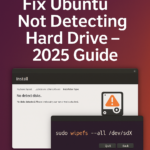
Ubuntu Installer can not find my SATA drive: I recently experienced a problem installing Ubuntu on a particular computer. Ubuntu's Ubiquity Installer could not detect my SATA drive, although sudo fdisk -l found the drive just fine, and the drive also appeared in gparted. As it turns out, the SATA drive had left over raid configuration information that was telling the installer to skip the drive (as if it was unsupported). In the following tutorial, I will show you what I did to get Ubuntu to detect the SATA drive, so that I could proceed and install Ubuntu.
Read the rest of this entry…

Create a Larger than 4GB Casper Partition

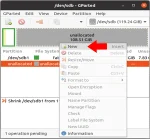
The following tutorial will show you one way to create a casper-rw partition on your USB flash drive. The benefit of using a casper-rw partition as opposed to a casper-rw block file is that you can expand your persistent storage beyond 4GB. This is very useful if you have a flash drive that is 8GB or larger and you want to use all of it's remaining space for persistent storage. The drawback is that Windows will not see the secondary casper-rw partition (in Windows, your drive will appear to be smaller than it is).

Read the rest of this entry…

Installing WINE on Ubuntu 9.10

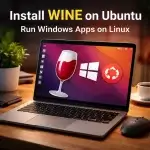
How to Install WINE on Ubuntu 9.10. WINE (Windows Emulator) appears to be currently missing from Ubuntu 9.10 repositories. In the meantime, the following tutorial explains how we quickly and easily got WINE running on Ubuntu 9.10, so that we could continue emulating or proceed to emulate Windows software in Linux.

Read the rest of this entry…

PDL Casper-RW Creator – Make a persistent file from Windows

How to Create a casper-rw persistent file from Windows: Due to popular demand from our pendrivelinux subscribers, we have created our own simple Casper-RW Creator script that will enable a user to quickly and easily create a casper-rw persistent image for storing saved changes and then restoring those changes on subsequent boots.

Read the rest of this entry…

Access Ext2 and Ext3 from Windows using Ext2Fsd

Accessing Ext3 and Ext2 partitions from Windows can be accomplished using a few different methods, as previously noted in (How to access a Linux partition from Windows). However, one of the easiest methods is by using a tool called Ext2Fsd. This tool ships with the drivers necessary for windows to detect and mount an Ext2 or Ext3 filesystem as read only or read/write. Additionally, Ext2Fsd comes with a Volume Manager and many other useful tools like mke2fs.exe (allowing you to actually create an ext2 formatted partition from windows). Installation is simple and straight forward.

Read the rest of this entry…

Cairo Dock Black Background Fix

How to Fix the Cairo Dock Black Background problem. On many Linux systems when hardware rendering is disabled and a composite manager is disabled, Cairo themes will display a black box or rectangle behind the dock. This issue can be fixed by installing a video hardware driver, activating desktop effects, starting compiz or activating composition in metacity. However, to quickly address the issue, we can simply emulate a transparent background.

Read the rest of this entry…

How to Install Cairo Dock on Ubuntu 9.10

In the following tutorial, we will show you how we installed Cairo Dock on Ubuntu 9.10. Cairo Dock is an animated application launcher or desktop dock that works much like the dock used in Mac OS X, but is much more flexible and customizable. Cairo-Dock also supports composition and Open GL rendering, allowing for some fascinating animated effects.

Read the rest of this entry…

How to resize casper-rw Images in Windows

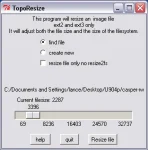
How to Resize casper-rw images: TopoResize is a Free Image Resizing Tool create by Chris Semler that can be used to resize images containing an ext2 or ext3 file system within Windows. This nifty tool can be used to create a new image and shrink or enlarge an existing image. Cygwin is used to port Linux file system tools like efs2progs to Windows. TopoResize can be used to resize casper-rw loop files and even resize Pendrivelinux 2009 filesystem images. TopoResize was witten by Chris Semler and was mainly used to resize coLinux ext2 and ext3 file system images.

Read the rest of this entry…

Sharing Files Between Ubuntu Flash Drive and Windows

How to Share Files Between your USB Ubuntu Flash Drive install and Windows. In the following tutorial, you will learn how to modify the casper script to allow you to mount your USB Flash Drive as read/write. By default casper only allows the root user to gain full access to the drive, preventing the live user from saving files back to the fat formatted device. This tutorial allows for the default Ubuntu user to also have the same read and write access.

Read the rest of this entry…

What is Persistent Linux

Persistent Linux – What is it? After looking through some of the tutorials offered on Pendrivelinux.com, you may be wondering what Persistent Linux means. So in the following segment, I will cover my understanding of persistence in relation to Linux, data storage and recovery. In addition, I will try to explain some of the limitations of using a USB Persistent or Persistence Data storage structure.

Read the rest of this entry…

Create a larger casper-rw loop file in Linux

The following tutorial explains how to create a larger casper-rw loop file for your Ubuntu based flash drive install. For example on: Ubuntu, Xubuntu, Kubuntu, Crunchbang or Linux Mint. A larger casper-rw loop file is particularly useful for those who have performed a Linux install to a large thumb drive using a Windows USB tutorial and need more persistent storage space for saving changes. The default casper-rw loop file we used in the Windows USB installation tutorials is only 1GB.

Read the rest of this entry…

How to Fix Ubuntu 8.04 Casper script for Persistence

Along with the final release of Ubuntu 8.04 came a bug which broke the persistence feature, ultimately dropping the user to a shell when booting with the persistent option. As it turns out, the problem lies with permissions being set to 755 for the cow device (strangely enough the prereleases did not have this problem). In the following tutorial, I will show you how to quickly fix the problem. This is the same process we used to create the custom initrd.gz file that is distributed with our Ubuntu, Kubuntu and Xubuntu 8.04 Hardy Heron related USB flash drive installation tutorials.

Read the rest of this entry…

Make your own portable Mandriva Flash

The following tutorial covers the process of creating or making your own Mandriva Flash drive. If you already have a USB flash drive, why not put it to use? The MCNLive team has done some outstanding work with their latest Mandriva based MCNLive CD releases. The persistent loop features and USB installer are nearly flawless. The persist boot option allows a user to save "ALL" system changes and settings back to the loop image file. This remastering process is fairly simple, so let's get started.

Read the rest of this entry…

Ubuntu Remote Desktop Sharing

The following tutorial covers the process of remotely accessing and controlling a Ubuntu installation from another PC that is using Windows or Ubuntu. This process should also work for other Debian based operating systems (with minimal changes) running either from a local hard disk, CD or portable USB device as long as the system is connected to a network and or has an internet connection established and has Remote Desktop (vino vncviewer) installed.

Read the rest of this entry…

How to install deb packages

This tutorial is for those who use Ubuntu, Debian or a derivative of Debian Linux and have downloaded a .deb package that they want to install. Typically you can use synaptic, apt-get or aptitude. However, if the package is not available via the repositories you may need to download and install them yourself.

Read the rest of this entry…

Upgrading NVIDIA Drivers in Debian Lenny

One of the drawbacks to installing NVIDIA Proprietary drivers in Linux is that when the kernel is updated, you have to reinstall (recompile) the software to match the new kernel. This tutorial explains how to upgrade Proprietary NVIDIA video card drivers after your Debian Lenny Linux system has been upgraded to a new kernel version. The process is pretty much the same as installing Proprietary video card drivers from scratch with the exception that we assume your already at the shell, unable to boot into X windows due to a kernel upgrade.

Read the rest of this entry…

Use a Floppy to Boot USB Pendrive Linux

If you have a system that does not support booting from a USB device, but do have a floppy drive, you can try to boot Pendrive Linux from a USB flash drive using a Grub Boot floppy disk. When using a Boot floppy with a Grub boot loader, Grub locates the USB partition and then attempts to boot loading vmlinuz and initrd.gz from the USB device.

Read the rest of this entry…

How to set up your own Debian Linux Mirror

Looking to build your own Debian Linux Mirror? Use your local hard drive or a network drive and share your mirror over a network or even on the internet. Having your our own Debian/Ubuntu Linux Mirror enables you to drastically speed up the process of installing packages or complete netbuilds on your single or networked Linux PC (s).

Using the following tutorial, the same method can be used for building a Ubuntu Mirror if desired.

Read the rest of this entry…

How to install Compiz Fusion on Debian Lenny

The following tutorial covers the process of installing Compiz Fusion on Debian Lenny. Compiz is the original compositing window manager. By using 3D graphics acceleration via OpenGL to render, Compiz provided intense immersing graphical effects on Gnome and KDE desktop environments. The Beryl window manager was a fork of Compiz and had shown great success. Currently, Compiz Fusion is the result of a merge between Beryl composite window manager and Compiz. It exposes the best features of both products.
Read the rest of this entry…

How to install Intel PRO ipw3945 wireless drivers

The following tutorial covers the process of installing ipw3945 drivers in Debian. Enabling you to get your Intel® PRO Wireless 3945ABG Wireless network card working in Debian. The Intel® PRO Wireless 3945ABG network cards are commonly used in various laptops ranging from HP to Dell. These drivers are in the non-free section and thus are not included with Debian or Debian remixes by default.

Read the rest of this entry…

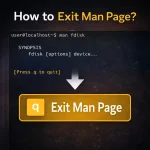
How to exit a Linux man page

How do I exit a man page when finished viewing? Although the answer to this question is well known, due to how many times I have been asked how to exit a man page or info page once done viewing, I thought I should put up a quick answer. Linux manual pages aka. man pages are provided with almost all software available for Linux and house important documentation about a program and explain how to use it.

Read the rest of this entry…

How to install and enable Compiz in Debian

Installing Compiz in Debian is a relatively simple process. What is Compiz? Compiz is an advanced compositing window manager that uses 3D Graphics acceleration to produce neat graphical desktop effects. Originally succeeded by Beryl (a fork of Compiz), Berl has since merged back with Compiz and both efforts are now one. If you have a decent video card and a 3D Linux graphics hardware driver enabled, there is good reason to install and take full advantage of Compiz.

Read the rest of this entry…

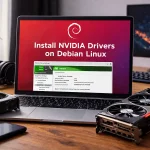
How to install NVIDIA video card drivers in Debian Lenny

The following tutorial covers the process of installing the Proprietary NVIDIA video card drivers from the Nvidia Website into your Debian Lenny Linux system. We have known a lot of people who have had some issues trying to get the NVIDIA drivers to install and work with Lenny, so we decided to write this tutorial to offer up some tips and help. This tutorial should have you up and running video hardware accelerated in just a few minutes.

Read the rest of this entry…

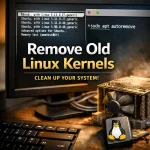
How to remove old kernel images

At some point in time, almost every Linux user will have updated their kernel image. After you've used Linux with the new kernel image for a while and your content everything is working properly, you might want to remove the old Linux image or images that still reside on your system and appear as grub boot options. The following process explains how to entirely remove the old Linux image which in turn also unclutters your grub menu.

Read the rest of this entry…

Mouse pointer disappears after switching users

In Linux, if your mouse pointer disappears after switching users or after logging out and then back in, the problem is most likely caused by a bug with your video card driver. In most cases the mouse will still continue to work even though the mouse pointer is hidden or has disappeared completely from screen view. The fix is actually quite simple and only involves adding a single options line to the xorg.conf file.

I've personally seen this problem occur in various Linux distributions including Debian, Ubuntu and Pendrivelinux.
Read the rest of this entry…

Install proprietary Nvidia or ATI drivers for Debian or Ubuntu

The following tutorial is for Debian or Ubuntu users who are looking to install proprietary drivers for their ATI or Nvidia video card. Installation of proprietary ATI or Nvidia video card drivers will allow you to take full advantage of all the 3d capabilities your Video card may have to offer. In this tutorial, we will be using a script called "envy" created by Alberto Milone.

Read the rest of this entry…

How to change the Debian Menu Icon

The following tutorial covers the process of changing the default Debian Menu Icon to a custom Icon and in addition change the Debian Menu name. This is for those of us that prefer to use a pure Debian Linux Operating environment or a remix that is based on Debian. This process was tested using a clean install of Debian Etch. Other Debian releases may vary.

Read the rest of this entry…

Changing the Ubuntu Start Menu Panel Icon

The following tutorial covers the process of changing or replacing the Gnome start menu panel icon with your own custom gnome panel icon. Enabling you to customize the look of your Ubuntu. The process was tested using Ubuntu 7.10 Gutsy Gibbon but should work with previous versions just as well.

Read the rest of this entry…

Ubuntu Desktop Effects – Fixing the missing titlebar

The following tutorial explains how to fix the Compiz Ubuntu Desktop Effects missing titlebar problem. If you've been toying around with Ubuntu 7.04 and have enabled Desktop Effects "Compiz", you might notice that the titlebar or window decorations have disappeared. This is a fairly common problem amongst systems using ATI or Nvidia video cards and commonly occurs after switching to a higher resolution. The fix is fairly simple.

Read the rest of this entry…

Ubuntu – Remove the prompt to eject CD

How to remove the Ubuntu eject CD prompt. The following tutorial covers the process of removing the "Please remove the disk, close the tray (if any) and press ENTER to continue" prompt entirely from your USB Ubuntu installation. The process is fairly simple and will allow your system to shutdown or restart without prompting you to remove the CD. Those of us booting from a USB stick, will surely be glad to get rid of the remove CD annoyance.

Read the rest of this entry…

Ubuntu toram – How to make Ubuntu Boot to Ram

This tutorial explains how to fix the Boot to Ram or "toram" feature that is currently broken in Ubuntu 7.04. Boot to Ram will enable a user to copy the entire Ubuntu live environment to system ram and run the Ubuntu Operating System entirely from there. You can then remove the CD or USB device and continue to do your work from system memory. BootToRam is also commonly referred to as CopyToRam.

Read the rest of this entry…

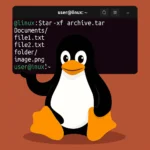
How to open a tar file in Unix or Linux

A lot of the downloadable Linux or Unix files found on the internet are compressed using a tar or tar.gz compression format. So, knowing how to open or untar these compressed files becomes very important. In the following examples, we will explain how to untar both popular formats and how to extract the contents to a different directory.

Read the rest of this entry…

How to make Totem Media Player play encrypted DVD's

The following tutorial covers the process of making Totem Media Player play encrypted DVD's. This tutorial assumes that your using Debian Linux or a distro based purely on Debian. It will allow you to have your own Debian DVD portable media center. If your getting error messages like the following, this tutorial is for you:

Totem could not play 'dvd:/ There is no plugin to handle this movie.

An error occurred: The source seems encrypted, and can't be read. Are you trying to play an encrypted DVD without libdvdcss?

Read the rest of this entry…

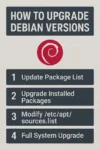
How to Upgrade from Etch to Lenny

How do I upgrade from Debian Etch to Lenny? The other day, one of our subscribers had asked us just that. Upgrading to a newer version of Debian is actually relatively simple and for the most part, can be done in very short time with just a few quick steps. So if you have Debian Linux installed on your PC and are eager to try out Lenny, go grab yourself a Soda and read on.

Please note that this tutorial assumes that your upgrading from a local hard drive installation of Debian Etch (This wont work on a compressed file-system)

Read the rest of this entry…

How to add a user to the sudoers list

How to add a user to the sudoers list? Beleive it or not, this is a fairly common question and in all reality the answer is quite simple. Adding a user to the sudoers list on a fully installed Linux system such as Debian is only possible via the command visudo. Users in the sudoers list are allowed the privileges to run commands and open files as the root user. In the following quick tutorial, we will show you how adding a new sudoer is quickly done.

Read the rest of this entry…

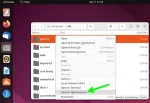
How to open files as root via a right click

The following tutorial explains how to add a context menu item that enables a Linux user to open files as the root user when browsing their file system using nautilus. This script feature allows the user to navigate their file system and open or edit any file or directory as the root user of the system. It's a perfect solution for those that are not completely comfortable using terminal commands.

Read the rest of this entry…

Making Ubuntu 7.10 – Casper Persistent

Making a casper persistent Ubuntu 7.10 (Gutsy Gibbon): With the coming release of Ubuntu 7.10 code named "Gutsy Gibbon", most of the portable linux community is likely going to want to run Ubuntu Gutsy from CD, USB or emulated using Qemu. So it only makes sense that, at the very least, we should be able to save and restore settings changes via a persistent partition or img (image).

Read the rest of this entry…

How to make Ubuntu 7.04 Casper Persistent

Making a casper persistent Ubuntu 7.04 (Feisty Fawn): Since the initial release of Ubuntu 7.04, much of the portable linux community has been eager to run Ubuntu 7.04 persistently from a USB device or emulated using Qemu. It only makes sense that we should be able to save and restore settings changes via a persistent partition or img (image). In the following tutorial, we are simply re-enabling the old casper system.

Read the rest of this entry…

Accessing a Linux Ext2 or Ext3 partiton from Windows

How to access a Linux ext2 or ext3 partition from Windows. Do you have files on your Linux system you would like to share with Windows? This is especially useful if you dual boot Windows and Linux on your machine. Maybe you have some mp3's, Video's, Favorites, e-Mail and more you would like to have access to from both operating environments? You no longer have to shut down Windows and boot Linux!

Accessing a Linux partition from Windows is relatively easy to accomplish and can be done via the download of a Free utility called Explore2fs.

Read the rest of this entry…

Mounting a Windows XP NTFS partition in Linux

How to access a Windows XP or Vista NTFS partition from Linux. The following tutorial explains how to gain access to a Windows NTFS partition using Linux. Reading or accessing NTFS partitions in Linux is important for many reasons. Some users repair Windows Operating environments using Linux, while others use a dual boot operating environment and would like to have access to their Windows File system.

Read the rest of this entry…

Grub Error 21 after full install to USB hard drive

Help! I'm getting a Grub 1.5 Error 21 after a Ubuntu USB hard drive install: We received this email the other day from someone who was trying to do a full Ubuntu Linux install to an external USB hard drive. This person already had Debian Linux installed on their local hard drive and was attempting to do an install of Ubuntu to an external USB hard drive.

Read the rest of this entry…

Restore Your USB Key to it's original state

After having tooled around with a USB Linux version using your image overwritten or multi partitioned flash pen drive, you might find it necessary to revert it back to a single fat partition (restore the flash pen drive to it's original state) that can again be read by all computers. Windows users can follow the Windows instructions below to Restore a Flash Drive using the HP USB Format Tool. For those working from Linux this task can easily be accomplished via the Linux Flash Drive Restoration tutorial that follows.

Read the rest of this entry…

Create Your Own Live Linux CD or USB distribution

Creating your own custom Live Linux CD or USB distribution is not complicated. However, there are many different approaches depending mainly on which Linux base you decide to use. Many popular Linux distro's such as Knoppix, Ubuntu and DSL are based on Debian so for the following tutorial, we are going to focus on the simple creation of a Live Linux CD using Debian Linux as our base.

Read the rest of this entry…

VGA Boot modes to set screen resolution

A simple way to set your screen resolution and color depth for most Live Linux distro's is via the use of the vga=parameter boot option. For example at boot you might type: Live vga=795. This would set your system to boot using the Live label with a screen resolution to 24bit 1280X1024. Here are some more examples of common vga boot values.

Read the rest of this entry…

How to clear the terminal command history

Clearing typed commands from terminal history: By default, up to the last 500 command lines a user types in the terminal window are saved into a hidden .bash_history file. The previously typed commands can be readily accessed by using the up and down arrow keys. This makes it easy to retrieve and reuse your recently used commands. However, maybe you want to clear the terminal command history list and start fresh?

This simple tutorial explains the process of viewing and then optionally clearing the terminal history.

Read the rest of this entry…

What is the default root password?

Setting the default root password: Some Live Linux distributions are created without a root password by default (the root account is inactive). This is particularly true with Debian based distributions like Ubuntu. Setting a root password enables us to access some essential tools such as the synaptic installer. In most cases, having no root password is fine when your running from a Live CD and don't need to do administration tasks, make changes or install additional packages. But for those of us who do want to make administrative changes and save them back to a USB device or local storage device on for example a properly created "casper-rw" partition. Setting the root password might then be necessary.

Read the rest of this entry…

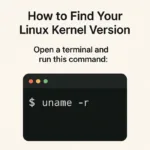
How to find your Linux Kernel Version

Checking your Linux Kernel Version: Once your up and running with your favorite Linux distribution, you might find the need to install additional software packages or drivers. Some of these software applications or drivers can be specific to a Linux Kernel version in which case you will need to find this information. Finding the Kernel Version, Release information and Operating System from a running system is fairly straight forward and can be done directly from a terminal.

Read the rest of this entry…

Ubuntu Edgy Beryl installation

This step by step tutorial explains how a user can install Beryl on Ubuntu Edgy. Beryl is a fork of the Compiz desktop window manager. It is an openGL accelerated desktop that allows the Linux user to attain awesome breathtaking special 3D effects with their personal desktop environment. The desktop effects are reminiscent to that of Windows Vista but were established long before Vista's arrival. Beryl uses a graphical user interface and is easy to navigate.

Read the rest of this entry…

Understanding the Linux File System

Once you have migrated from Windows to Linux you may notice that the file system is not what your accustomed to. Of the first things the average user needs to understand is the inner workings of the root file system and Linux core directory structure. To help you understand this structure, we have listed each directory explaining what it is commonly used for.

Read the rest of this entry…

Ubuntu Linux Shell Commands quick reference

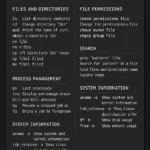
The following is a quick reference list of some useful Ubuntu shell commands along with a short description of common usage. There are more, but this basic list was created to help familiarize the newly introduced Ubuntu user who might be migrating from a Windows operating environment.

*Ubuntu is a product of Canonical Ltd

Read the rest of this entry…

Installing proprietary ATI or NVIDIA video drivers for Ubuntu

This tutorial covers how to easily install proprietary drivers for your Nvidia or ATI video card using envy. These are the drivers that are listed in the download section of the ATI and NVIDIA Websites. Advantage to installing these drivers over the nvidia-glx or xorg-driver-fglrx are that you get a nice GUI control panel and advanced features to work with.

We will be using a script called "envy" created by Alberto Milone.

Read the rest of this entry…

Installing NVIDIA drivers in Ubuntu edgy

Ubuntu does not ship with NVIDIA 3D acceleration enabled. Getting the NVIDIA Geforce video card working to it's full potential requires the installation of an additional glx driver package. The nvidia-glx driver will allow us to make better use of the Geforce type video card. The process is simple, however many tutorials make it more complex than need be.

Read the rest of this entry…