USB flash pen drive tools Category
Boot DOS from USB
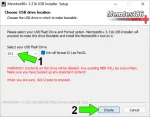
Creating a DOS Bootable USB Flash drive to "Boot DOS from USB", is not very complicated. However, a tool called Rufus, created by Pete Batard, can make this task simple. Rufus can also be used to create a Bootable USB version of a given distro from an ISO File. Rufus is similar in appearance and operation to the HP USB Format tool "HPUSBFW.exe", and shares many of the same features. However, Rufus is Open Source.
PDL Casper-RW Creator – Make a persistent file from Windows
How to Create a casper-rw persistent file from Windows: Due to popular demand from our pendrivelinux subscribers, we have created our own simple Casper-RW Creator script that will enable a user to quickly and easily create a casper-rw persistent image for storing saved changes and then restoring those changes on subsequent boots.
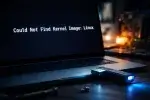
Error: Could not find kernel image: Linux
The Could not find kernel image: linux error typically occurs on USB flash drive Linux installations if syslinux could not find the configuration file syslinux.cfg. This configuration file is used to tell syslinux where your kernel image and initrd files are located. In the following section we will cover some of the basic things to look for if you are encountering this boot error.
Running Makeboot.bat in Vista
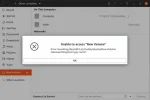
Some Windows Vista users may experience an issue when attempting to run the makeboot.bat file from their USB drive. The makeboot.bat file is suppose to install a syslinux hidden ldlinux.sys file and the MBR to make the drive bootable. However, in such cases, the script may display an error that looks something like the following:
Permanently remove information from your USB Drive
The following tutorial explains how to permanently remove deleted information from your USB flash drive or any other partition making the deleted information (for the most part) non-recoverable. We are able to accomplish this task by zeroing out the empty space on the drive using dd. There are many great uses for dd, from forensic data recovery and data backup to zeroing out empty drive space.
Testing your system for USB boot compatibility
The following tutorial will enable a user to check if a computer system can boot from a USB device and ultimately help determine if the computer can boot a Linux version from USB. In most cases if the test is successful, you should have no problem running Linux portably via syslinux. In addition to testing your PC for USB Linux boot capability, the "Memtest86+" system memory diagnostics program that is included, allows the user to scan their system memory for errors by simply booting memtest from a USB device or flash drive.
Restore Your USB Key to it's original state
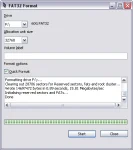
After having tooled around with a USB Linux version using your image overwritten or multi partitioned flash pen drive, you might find it necessary to revert it back to a single fat partition (restore the flash pen drive to it's original state) that can again be read by all computers. Windows users can follow the Windows instructions below to Restore a Flash Drive using the HP USB Format Tool. For those working from Linux this task can easily be accomplished via the Linux Flash Drive Restoration tutorial that follows.
Recommended USB Linux flash drives
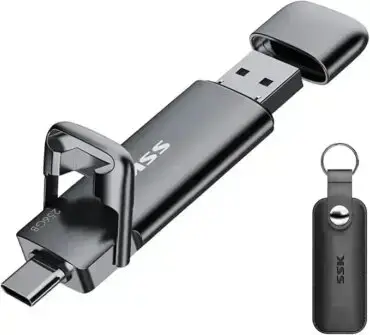
Recommended USB flash drives for portable Linux installation: Recently, we have been testing many different USB flash devices, commonly referred to as flash drives, pen drives, thumb drives and memory sticks for Linux and BIOS booting compatibility. We have come to the conclusion that there are some drives that work great with the USB Linux tutorials and others that don't work so well for this purpose. This page lists the flash drives we have had success with.
Install a new mbr to your USB flash device
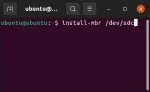
Some USB flash drives are notorious for having problems with corrupted master boot records. If your system refuses to boot from the flash memory stick, the mbr may be at fault. To fix this, you can use the mbr package to install a new master boot record. Credit goes to BHSPitMonkey for pointing out this fix. The troubled drive he encountered was a Kingston Data Traveler 2GB unit.
Booting Linux using USB-ZIP on older systems
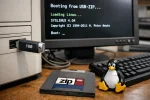
If you have an older computer system, your BIOS might not support USB-HDD boot. In this case, it may still be possible to boot Linux from USB if your BIOS does list USB-ZIP as a boot option. In order for this to happen, we need to trick the BIOS into thinking that the USB flash drive is a zip drive.
We can trick the BIOS by modifying the number of heads and sectors being displayed from the USB flash device to match that of a zip drive. Then we partition the drive using partition 4 (the partition that zip drives typically use). For this tutorial we will use the mkdiskimage application that comes with syslinux.
Large external USB Hard Drive Fat32 Format utility
When working from a Windows environment (particularly Windows XP), you may experience difficulty using the default Windows format tool to format your large external USB hard drive as Fat32.
Run Syslinux from windows 98/ME
Syslinux can be run under many different Windows operating environments including DOS. The following document lists a couple examples of how to use syslinux depending on your operating environment. Note that these paths may change with newer releases of syslinux and this information is being provided for reference only.
U3 Uninstaller for USB Flash Drive
How to easily Remove the U3 smart software from your USB Flash Pen Drive. "The U3 uninstaller application is available directly from U3".
Most avid users of USB storage media have recently begun to realize that a vast majority of USB flash pen drives manufactured today are packaged with the U3 software. While this software has some neat features and package includes, a seasoned computer user may not need or desire to use the U3 smart software.